Based in Lander, Wyoming for much of the year, we’re fortunate to have Brooks migrate south to guide with us during peak season in Joshua Tree National Park. A seasoned Wyoming climbing guide and instructor with National Outdoor Leadership School (NOLS), Brooks brings a vast breadth of instructional experience to every course and climbing day. His background in immersive multi-day education courses, risk management, and experiential learning makes him not just a strong climber—but an exceptional teacher.

Brooks approaches guiding as an educator first. He has a gift for breaking down complex movement into clear, manageable steps, meeting climbers exactly where they are, and building skills with intention. Whether it’s dialing in footwork, learning to lead, refining crack technique, or understanding systems and anchors, he empowers his guests with the tools and confidence to progress independently. His calm presence and warm teaching style create an environment where growth feels both achievable and inspiring.

For Brooks, climbing is about possibility—helping people step into goals that once felt out of reach. He thrives on those breakthrough moments: the first solid gear placement, the first committed move above a bolt, the first time trusting friction on Joshua Tree granite.

He’s drawn to the park’s surreal formations and deep-rooted climbing history. Around every corner of Joshua Tree is a hidden classic, a proud line, or a reminder of the generations who shaped the culture before us. It’s a landscape that rewards patience, boldness, and solid technique.

In his spare time, Brooks plays bluegrass on his acoustic guitar and hunts elk in Wyoming’s Wind River Range. And if you mention a route in passing, don’t be surprised when he recalls the pitch count, crux sequence, and descent details—his encyclopedic memory for climbing beta has earned him the nickname “Beta Bot.”

Whether you’re brand new to outdoor climbing or refining advanced skills, Brooks combines elite instruction, wilderness education expertise, and genuine stoke to help you climb smarter, stronger, and more confidently.

Certifications: AMGA Rock Guide Apprentice; Wilderness First Responder

As an Ohio native, Brad didn’t grow up with much access to climbing—but he did grow up with a pull toward the outdoors. That pull led him to take a bold first step: his very first backpacking trip was the full 2,200 miles of the Appalachian Trail. All of it. Somewhere between Georgia and Maine, surrounded by wild places and like-minded wanderers, he was introduced to new ways of moving through the landscape—rock climbing among them, and he was hooked from that point on.

What Brad loves most about climbing, and guiding,is its honesty. Stone doesn’t negotiate. It invites you to step up, confront fear, and commit. And in that space, something shifts. People discover strength, resilience, and courage they didn’t know they had. Helping others tap into that potential is what inspires him as a guide.

Brad is one of the few guides who calls Joshua Tree home year-round. In the heat of summer, he adapts to the rhythm of the desert. Chasing shade, exploring the park’s caves during the midday sun, and climbing in the golden hours of early morning and late afternoon. He also guides on the storied granite walls of Tahkitz in Idyllwild, where long routes and higher elevation offer a reprieve from the heat.

When he’s not tied in, Brad is usually on the trail. He’s logged more than 6,000 miles on backpacking trips, including 2,650 miles on the Pacific Crest Trail and 1,000 miles along the Continental Divide Trail. He’s also an avid birder, and loves catching glimpses and hearing the unique songs of our avian friends along his journeys.

Certifications: PCGI Lead Guide; Wilderness First Responder

Carrie grew up in Madison, WI as the youngest of six kids—which means she mastered the art of scream-talking early. As a kiddo, she always felt most at home outside, spending long summer days in the local forest preserves building forts, catching bugs until sunset, hunting and fishing with her family, and going on camping trips in the Summer.

Before stepping into guiding, Carrie followed a winding trail. Getting a Bachelor’s degree in Conservation Biology and working as a restoration ecologist across the Midwest, reviving prairies and stewarding native landscapes. Then managing multiple restaurants in small mountain towns in Colorado. Through every chapter, one thing stayed constant: she ran toward the mountains in her free time. She built her life around shoulder seasons, carving out space for road trips to climbing destinations across the country—seeking out new rock and landscapes to play on.

In early 2020, Carrie decided to take the leap to nomadic life and prioritize climbing and travel. She and her partner bought a school bus and hit the road, spending the winter in the American Southwest climbing, hiking, biking, and running beneath wide desert skies. The future was uncertain—but the direction felt true.

Along her travels Carrie met the owner of Devil’s Lake Climbing Guides, and they immediately hit it off, and was hired on the spot. She worked her way from apprentice to lead instructor and helped develop new programs and events for the community. Now, she’s thrilled to bring her Midwestern hospitality, dirtbag spirit, and deep love of wild places to Joshua Tree. For Carrie, guiding is about more than climbing—it’s about connection: to yourself, to your partners, and to the landscape around you.

When she’s not guiding, you’ll likely find her trail running, hunting, reading, practicing yoga, crushing a basket of french fries, or wrangling her 17 nieces and nephews—still working on recruiting all of them into climbing.

Certifications: AMGA Rock Guide Apprentice; Wilderness First Responder

Ethan Pringle is a world-class climber whose career spans two decades at the forefront of sport climbing, bouldering, and big-wall free climbing. Known for his precision, power, and longevity in the sport, Pringle has established and repeated some of the world’s most iconic lines, including the benchmark 5.15a “Jumbo Love.” His versatility sets him apart: he excels on steep sport routes, highball boulders, and large-scale objectives, bringing the same technical mastery to every style.

Beyond performance, Pringle is recognized for thoughtful storytelling, compelling media presence, and an authentic voice within the climbing community. His videos, interviews, and written pieces resonate with audiences seeking honest perspectives on training, risk, and the mental side of progression. Brands and partners trust him for credible, relatable representation.

As climbing continues its global growth, Ethan Pringle remains a defining figure—an athlete who blends elite achievement with experience-driven insight, inspiring climbers across generations.

Katie Lamb is a breakthrough force in modern climbing, recognized for her precision, composure, and groundbreaking achievements on some of the hardest boulders in the world. Emerging as one of the strongest climbers of her generation, Lamb has repeatedly pushed the upper limits of difficulty, highlighted by her historic ascent of “Box Therapy” (V16), making her the first woman to climb at that grade. Her climbing is defined by methodical movement, exceptional finger strength, and an analytical approach that allows her to unlock sequences few can execute.

Lamb’s influence extends beyond performance. Her training insights, detailed problem breakdowns, and authentic communication resonate with climbers seeking thoughtful, evidence-based progression. She brings a deliberate, intelligent style to every project, earning respect from elite peers and industry leaders alike.

As bouldering continues to evolve, Katie Lamb stands at the forefront—an athlete setting new standards, inspiring global audiences, and redefining what’s possible on the world’s hardest blocs.

Hailey Kellacky first entered the world of climbing in high school, as a tactic to get over her fear of heights. Her humble beginning was on a gym club. Much to her surprise it became an immediate obsession, and after getting her first taste of climbing outdoors in El Dorado Canyon she never looked back.

Once Hailey experienced climbing in Yosemite her focus transitioned from climbing for fun to loftier goals of high summits and big walls. At that time she was pursuing a career in computer sciences and after spending a spring in Yosemite it became apparent she wanted to switch directions and commit to a career of climbing. Immediately after, she completed her SPI course.

Fast forward to Joshua Tree and like so many of us who love it here, once Hailey landed in town she “just never really left.” Befriending one of the Cliffhanger guides, she fell in fast with the crew and began jumping into sub whenever last-minute help was needed.

Now we are lucky to call her one of our own! Hailey’s passion for climbing makes her a great guide to introduce you to the world of trad climbing here in Joshua Tree.

In her free time, you can find Hailey cooking, caving, climbing, and gaming.

Certifications: AMGA Rock Guide Apprentice; Wilderness First Responder


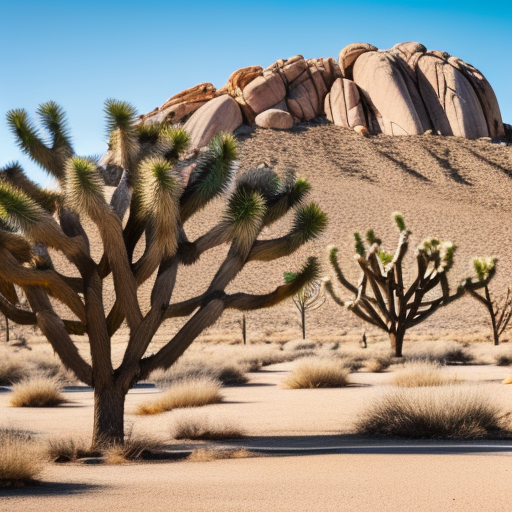
The unique and fascinating world of plant life holds within it an array of captivating species, each with its own story to tell. One such intriguing species is the Joshua tree (Yucca brevifolia), a remarkable plant that thrives in the arid landscapes of the southwestern United States. In this article, we’ll delve into the captivating world of the Joshua tree, exploring its origin, characteristics, significance, and the challenges it faces in its natural habitat.

Table of Contents

  1. Introduction
  2. The Origins of the Joshua Tree
  3. Distinctive Characteristics of the Joshua Tree
  4. The Role of Joshua Trees in the Ecosystem
  5. Cultural and Historical Significance
  6. Conservation Efforts and Challenges
  7. The Future of Joshua Trees
  8. Conclusion
  9. FAQs

Introduction
The Joshua tree, with its distinct appearance and prevalence in the Mojave Desert, has piqued the curiosity of both scientists and nature enthusiasts alike. In this article, we’ll embark on a journey to uncover the secrets and wonders of this iconic plant.

The Origins of the Joshua Tree
The Joshua tree has ancient roots, having adapted to the harsh desert conditions over millennia. Its name is said to have been inspired by the biblical figure Joshua, who seemed to raise his arms skyward in prayer. But beyond its name, the tree’s history dates back to a time long before human civilization encroached upon its arid habitat.

Distinctive Characteristics of the Joshua Tree
Standing as a true testament to the wonders of evolution, the Joshua tree boasts several unique characteristics. Its spiky, rough-edged leaves and distinctive branching patterns allow it to thrive in the desert’s challenging environment. Its impressive height and branching arms make it a recognizable figure against the backdrop of the vast desert landscape.

The Role of Joshua Trees in the Ecosystem
Despite the seemingly inhospitable conditions of the desert, the Joshua tree plays a vital role in its ecosystem. Its flowers provide nourishment for local pollinators, and its fallen branches offer shelter for small animals. Moreover, its root system helps prevent soil erosion, contributing to the delicate balance of desert life.

Cultural and Historical Significance
The Joshua tree holds a special place in the hearts of indigenous communities and settlers who have long called the desert home. Its unique silhouette has inspired art, folklore, and even modern-day conservation efforts. The spiritual connection that many people feel toward these trees highlights their profound impact on the cultural tapestry of the region.

Conservation Efforts and Challenges
In recent years, the Joshua tree has faced challenges brought about by climate change and urban development. Rising temperatures and prolonged droughts threaten the delicate balance that these trees depend on for survival. Conservationists and scientists are working diligently to protect this iconic species and its fragile ecosystem.

The Future of Joshua Trees
As we peer into the future, the fate of the Joshua tree hangs in the balance. Will the efforts of dedicated individuals be enough to ensure the survival of this extraordinary species? By raising awareness, supporting conservation initiatives, and implementing sustainable practices, we can strive to secure a future where the Joshua tree continues to thrive.

Conclusion
The Joshua tree stands as a symbol of resilience and adaptability, defying the odds to flourish in one of the harshest environments on Earth. Its unique characteristics, cultural significance, and vital role in the ecosystem make it a plant worthy of admiration and protection. By joining hands and taking action, we can contribute to the preservation of this remarkable species for generations to come.

FAQs
Q1: Are Joshua trees found only in the Mojave Desert?

A: Yes, Joshua trees are primarily found in the Mojave Desert in the southwestern United States.

Q2: How tall can a Joshua tree grow?

A: Joshua trees can grow up to 40 feet in height, with their distinctive branches extending outward.

Q3: Are Joshua trees a type of cactus?

A: No, Joshua trees belong to the Agave family and are not classified as cacti.

Q4: Can Joshua trees survive extreme drought conditions?

A: Joshua trees have adapted to survive drought conditions, but prolonged and severe droughts can still pose a threat to their survival.

Q5: What can individuals do to help conserve Joshua trees?

A: Individuals can contribute by supporting conservation organizations, advocating for sustainable practices, and reducing carbon emissions to mitigate the effects of climate change on Joshua tree habitats.

Joshua Tree

Originally from the flatlands of Illinois, Joey fell in love with climbing while on a high school trip to Joshua Tree. He was instantly hooked on the style of climbing and the vastness of the Mojave desert and knew he had to come back. After high school, Joey found himself attending Prescott College where he really cut his teeth in the climbing world. He was lucky enough to have incredible mentors that got him to where he is at now.  Since graduating college, Joey has worked a number of gigs in Adventure Education and the guiding world including being a mountaineering and rock guide in Mount Shasta, an adjunct instructor for Prescott College and now finds himself working in his favorite place in the world -Jtree! When Joey isn’t climbing, you can find him playing sexy riffs on his guitar, paragliding, skydiving or singing Dio songs at karaoke night. He is passionate about his work and loves to share fun facts about the flora and fauna of the desert southwest.

Lynn Hill is a living legend. Few have accomplished an athletic feat more than a decade before anyone else- man or woman. Lynn changed the definition of what is possible in rock climbing with her first free ascent of the most famous big wall climb in the world called The Nose on El Capitan in Yosemite Valley, California. Over nineteen years later, Tommy Caldwell and Lynn are still the only two people in the world to have succeeded in making an all free one-day ascent of The Nose.

A natural athlete, Hill has competed as a gymnast and runner as well as a climber. She first roped up at the age of 14 and excelled immediately. By the late 1970s she was climbing near the top standards of the day. In 1979, she was the first woman to climb a route rated 5.12d. Lynn continued to climb routes at the highest standards of difficulty over the years to follow, including being the first woman to do a route graded 5.14 in 1991 – three years before any other woman. In 1992, Lynn was also the first woman to make an on-sight ascent of a climb rated 5.13b.

Hill discovered competition climbing during a visit to France in 1986. She quickly moved into the top ranks and won more than 30 international competitions, including five times at the Arco Rock Master, the Wimbledon of competitive climbing.

The following year after her first free ascent of the Nose in a day in 1994, Lynn took her big wall skills to the high peaks of Kyrgyzstan. There she made the first free ascents of two 5.12 big walls: the 4,000-foot west face of Peak 4810 with the late Alex Lowe and the Perestroika Crack of Peak 4240 with Greg Child. In 1999, Lynn led a small team of women to the island of Madagascar (located off the coast of Africa) to do a first ascent up a steep, two-thousand-foot wall of granite. This route turned out to be perhaps the most difficult first ascent of a big wall ever done by a team of women (5.13d/A0 5.12c mandatory).

As a part-time resident of both France and Italy, Lynn has become fluent in French and Italian. Her travels have taken her to various places throughout Europe and to remote climbing destinations in Vietnam, Thailand, China, Morocco, Australia, Madagascar and South America.

Among the world’s best-known climbers, Hill has been a guest at the White House and has been featured on numerous television shows such as Late Night with David Letterman, Battle of the Superstars (first place in the 50m swim event against sports stars such as Martina Navratilova), Four-time winner of the, Survival of the Fittest competition televised on NBC Wide World of Sports, That’s Incredible, National Geographic Television, Canal Plus, MTV Sports, ESPN “A History of Women in Sports”, Outdoor Life Network, ABC Sports: “The North Face Expedition Series”, as well as been featured in many publications from Life, Time, Sports Illustrated, Self, Shape, New York Times Magazine, Vanity Fair, Vogue, in addition to gracing the covers of the best known climbing and outdoor magazines such as Outside, Climbing, Rock and Ice, Vertical, Mountain, Desnivel, and Montagne. Lynn has contributed essays in books such as, The Meaning of Life, Voices from the Summit, Fifty Favorite Climbs, as well as co-authored her own story titled, Climbing Free: My Life in the Vertical World (published by W.W. Norton). Lynn is currently working on a climbing technique video called, Climbing Free, which includes elements of culture, history, and psychological perspectives that have influenced her evolution as a free climber over the past thirty-five years.

Read more about Lynn on Wikipedia

I’m Sabra Purdy, the other half of Cliffhanger Guides. I grew up scrambling on the crazy limestone boulders in Columbia State Park. Early on, I realized that the eastern Sierra was where I wanted to be. I liked big landscapes, big views, and big old pieces of stone. I learned to climb on the rocks of Tuolumne Meadows and its environs and realized that this messing about on rocks made me happier than anything else in the world. I love rocks, rivers, and road trips, and have a special fondness for ill-conceived journeys into foreign countries (a formative travel book in my youth was titled I Should Have Stayed Home).

Around 2005 I met one Mr. Seth Heydon Zaharias – mad Greek, inspired adventurer, climber of off-widths, and hands down, the funniest person I’ve ever known. I’ve never had a better partner and we recognized in each other kindred spirits. So much so that I hauled off and married him. Now that was an adventure! We’ve spent many wonderful days together on the rock, adventuring, and causing scenes. Somewhere along the line in my checkered academic career (it took me 8 years to get my undergrad because I kept running off to the mountains), I got hired to take kids climbing. That was so much fun, I hired on with a local organization that got kids outside fooling around in dirt and climbing. Eventually, I ended up at UC Davis where I spent the next 6 years working for their highly developed outdoor program, Outdoor Adventures, while pursuing a Masters’s in Restoration Ecology. At OA, I managed the climbing program, taught classes, and trained guides. In more recent years I’ve taken courses through the Professional Climbing Guides Institute and started Cliffhanger Guides with Seth.

People have a deep-seated need for adventure in the outdoors. It allows us to refresh our minds and spirits and gets us away from the grind of our stressful lives. I have seen firsthand how transformative a fun and exciting day in the outdoors can be. We feel like it is our personal duty to get people out into nature. It feels so good to see someone’s face light up when they reach the top of a climb, the happy camaraderie of a day well-spent in the mountains, the amazing transformation that occurs as stress and the everyday concerns fall away.  We’ll make you laugh with our off-color stories and our hare-brained schemes. I’ll tell you more than you ever wanted to know about bugs and snakes and weeds and things. We will eat and be merry. I invite you to come adventuring with us.

Certifications: PCGI Single Pitch Guide; Wilderness First Responder